
Resource RecommendationVehicle, helicopter or both
Recommends, for each task, the resource that fulfils it fastest. With landing site, shuttle vehicle and a replacement for the incident that can wait, in one alert.
Our view
The patient needs an emergency physician. How the physician gets there is what the recommendation works out.
01
Sunday, 3 pm
Cardiac arrest in the middle of the city. All emergency physicians are on incidents, the nearest free emergency ambulance is far away.
Very close by, an emergency ambulance is driving to a fall that can wait. A HEMS helicopter is on its return flight. The dispatcher has no time to think all this through.
02
Always on top or never
The classic recommendation works through a table: keyword unconscious person, so one emergency ambulance and one physician response car, the nearest of each. If no physician response car is free, the helicopter is missing, and the dispatcher has to think of it unaided.
Or it is calculated with a fixed lead time and the straight-line distance. Then it is almost always on top, even when that is not true. After a few weeks nobody looks any more.
03
An emergency physician, not a vehicle type
The patient needs an emergency physician, not a physician response car. That is why physician response car and helicopter compete in the same row, calculated until the crew is with the patient: flight, landing, getting out and the last stretch.
If the helicopter is on top, the reason is below it: “No physician car free”.
04
Landing sites that really exist
We look for open areas of the helicopter's size and subtract what is in the way: buildings, trees, masts, power lines. The basis is a surface model, aerial images and the obstacle data of the air navigation service. Then we rank the sites by the way to the patient, calculated with our Bluelight Routing.
The same technology shows the crew the landing options in HeliMission.
05
Reassign without tearing a hole
The fastest emergency ambulance is often already on the road, to an incident that can wait. The recommendation takes it if it is clearly faster than any free one, and says where it comes from: “from the fall, can wait”.
For the incident it leaves, it calculates a replacement at once. Both go out with the same alert.
06
Each takes its fastest leg
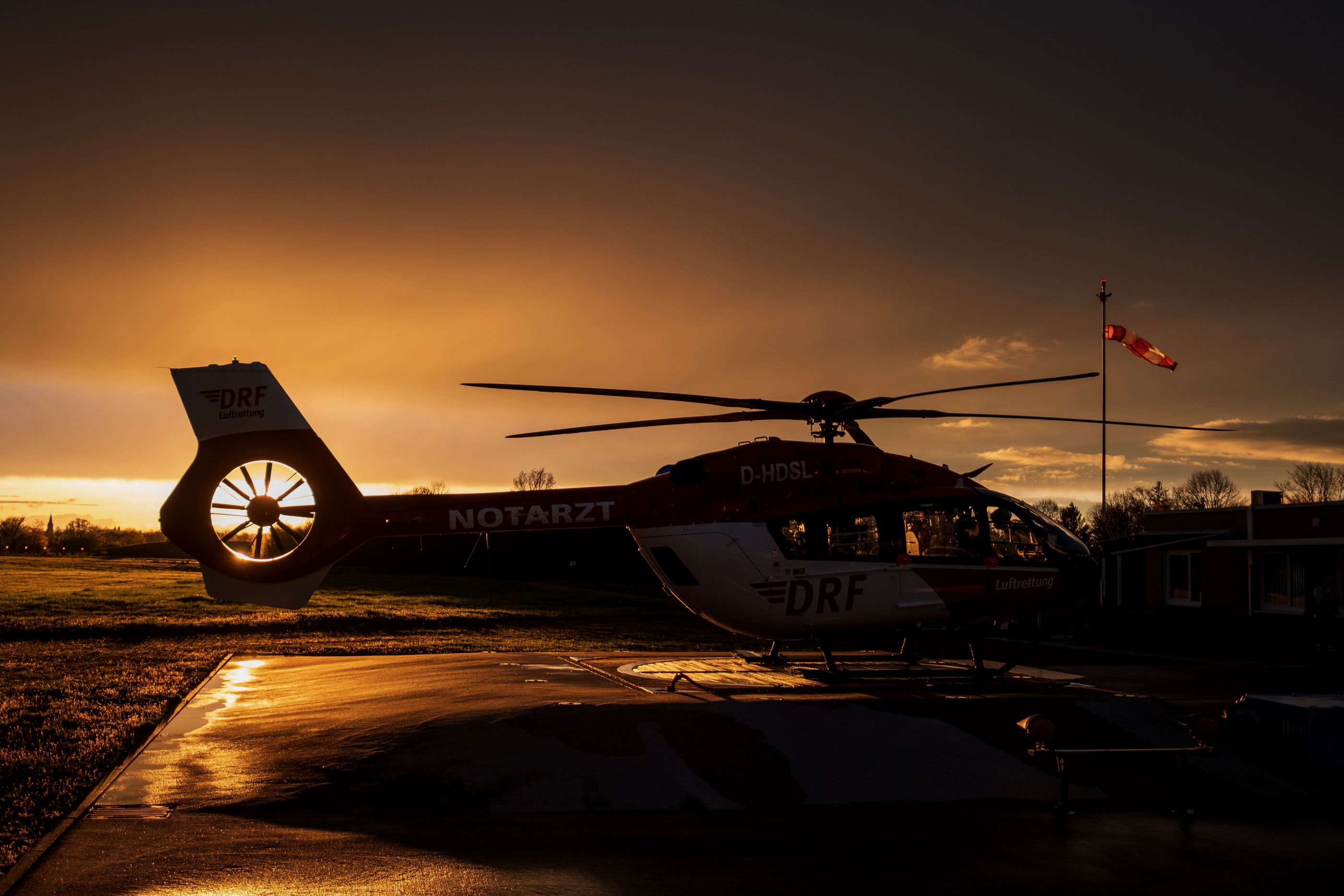
The helicopter lands on a sports field nearby. With it, the recommendation includes a shuttle vehicle that picks up the crew there: the least costly free vehicle, first a patient transport ambulance, then a command vehicle, never a physician response car. If it has to be alerted first, we include that time.
Often the patient does not fly at all. Then the helicopter brings the emergency physician, and the emergency ambulance drives to the hospital.
07
For a stroke, both at once
In a severe stroke, what counts is the time to thrombectomy. The emergency ambulance is with the patient first, the helicopter gets the patient to the right centre faster. So we recommend both, at the same time. Requested only after the examination, it would add take-off and approach on top.
The suspicion comes from the keyword or, with good call-taking, already from the caller's answers. Which hospital performs thrombectomy and can admit right now is known to our Hospital Capacity.
08
Meeting point on the way
The emergency ambulance does not wait at the scene for the helicopter. It sets off towards the centre and meets it at a landing site on the way. We choose the site where neither has to wait for the other.
If the suspicion is not confirmed, the helicopter is cancelled. If it takes over the patient, the emergency ambulance is free again sooner.

09
One alert for all tasks
What the dispatcher confirms goes out together: the emergency ambulance with a replacement for the incident it left, the emergency physician by helicopter with landing site, the shuttle vehicle, the citizen responders. Each row with its reason.
The same alert asks the citizen responders via our First Responder app; the nearest fetches a defibrillator on the way. For less urgent incidents, the recommendation also shows what the departure means for Coverage.
10
Close the gap right away
With the alert, vehicles leave their area. Right after it, the recommendation shows where this opens a gap and which free vehicle closes it. A separate step, so that the alert has to wait for nothing.
The recommendation turns directly into a relocation order.
11
The same landing site in the cockpit and on the ground
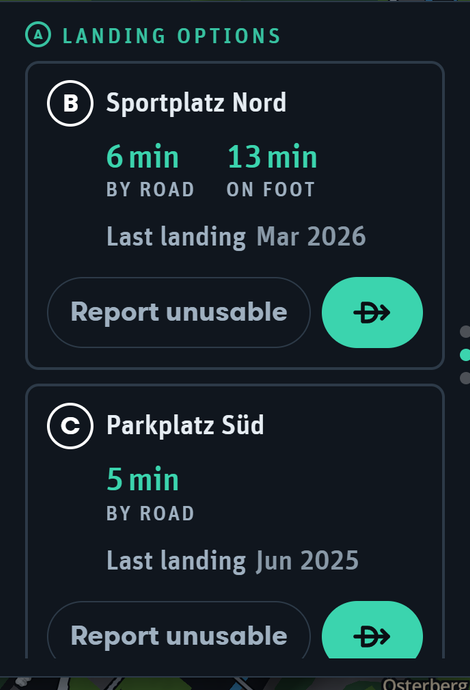
The landing site from the recommendation is seen by pilot and HEMS TC in HeliMission, and by the ground units in the App. Where to land is the crew's decision.
Anyone already on scene can reject a site with a photo, for example because of a power line.
12
In the list the dispatcher already knows
Our routing is in almost every CAD system in our markets. The recommendation reaches the dispatcher the same way.
The dispatch centre already knows the status and position of the helicopters. In future we will also calculate with the fuel on board.
See Resource Recommendation in action.
We show it to you in your own area. With your stations, your roads, your response times.