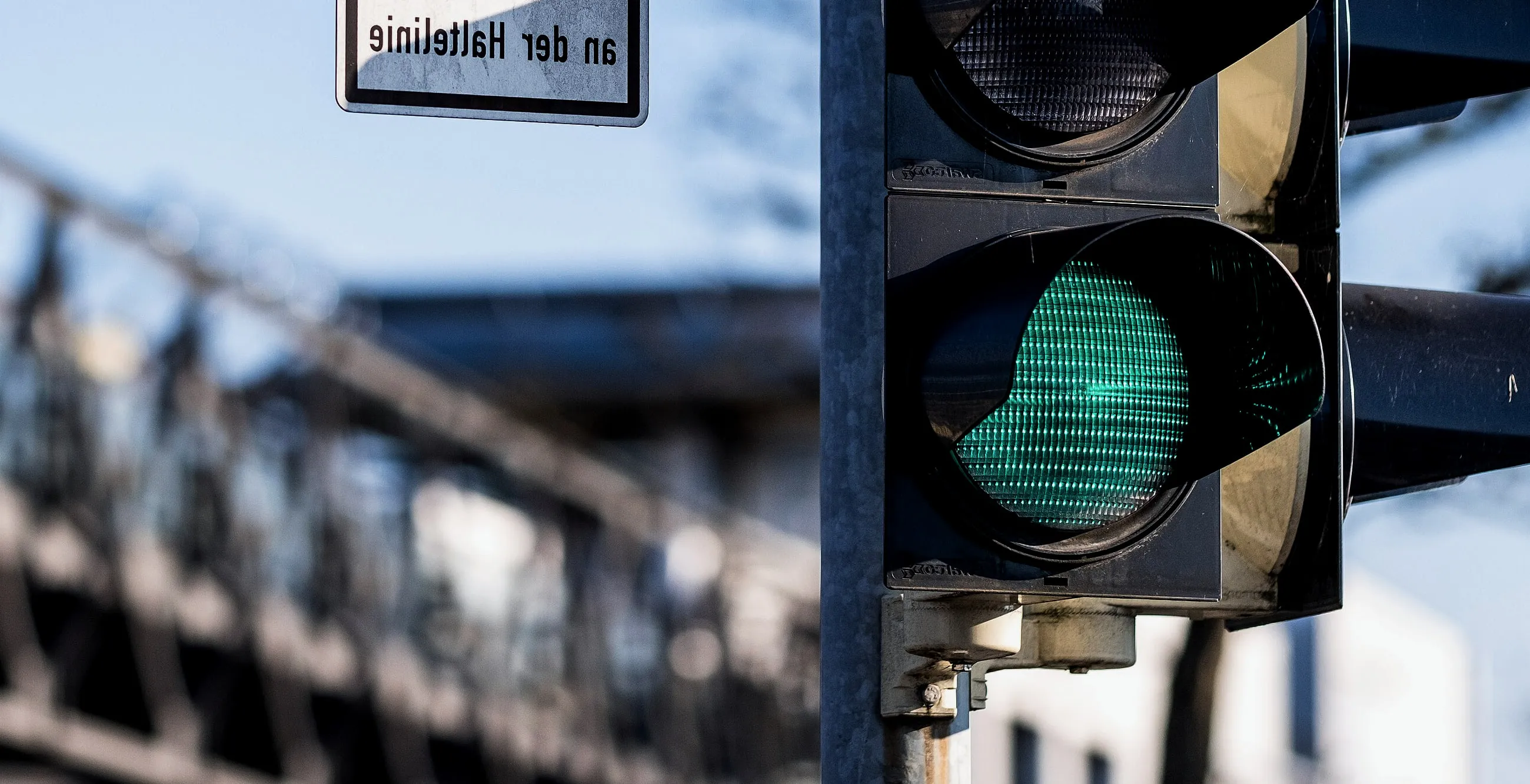
Signal PrioritySignals, bollards, barriers and gates
Traffic lights turn green, bollards lower, barriers and gates open before the emergency vehicle arrives. Via the mobile network, directly via V2X, or both.
Our view
An emergency vehicle should not have to wait at any traffic light or bollard.
01
The route drives ahead
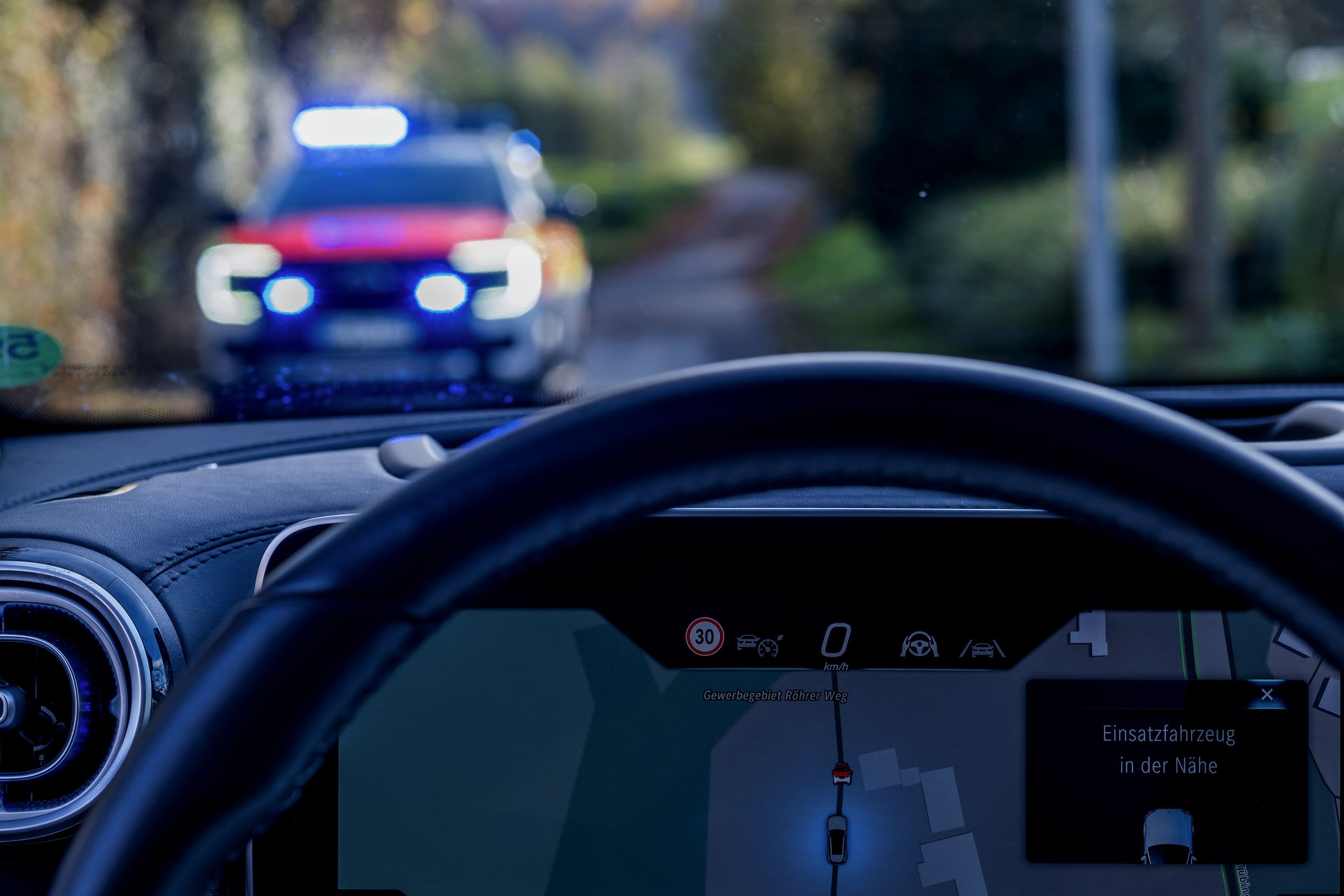
A virtual twin drives the planned route ahead of the vehicle. It requests traffic lights, bollards and barriers in good time and warns connected cars before the emergency vehicle arrives.
Because the route is known, the request is not made at fixed detection points, but exactly as early as this junction needs.
02
Two paths to the traffic light
Via the mobile network and the traffic computer, the request arrives early and reaches many traffic lights at once. Directly via V2X, the vehicle radios the junction itself, without a mobile network and with very little delay.
We recommend both. If one path fails, the other carries the request.
03
The crew sees it turning green
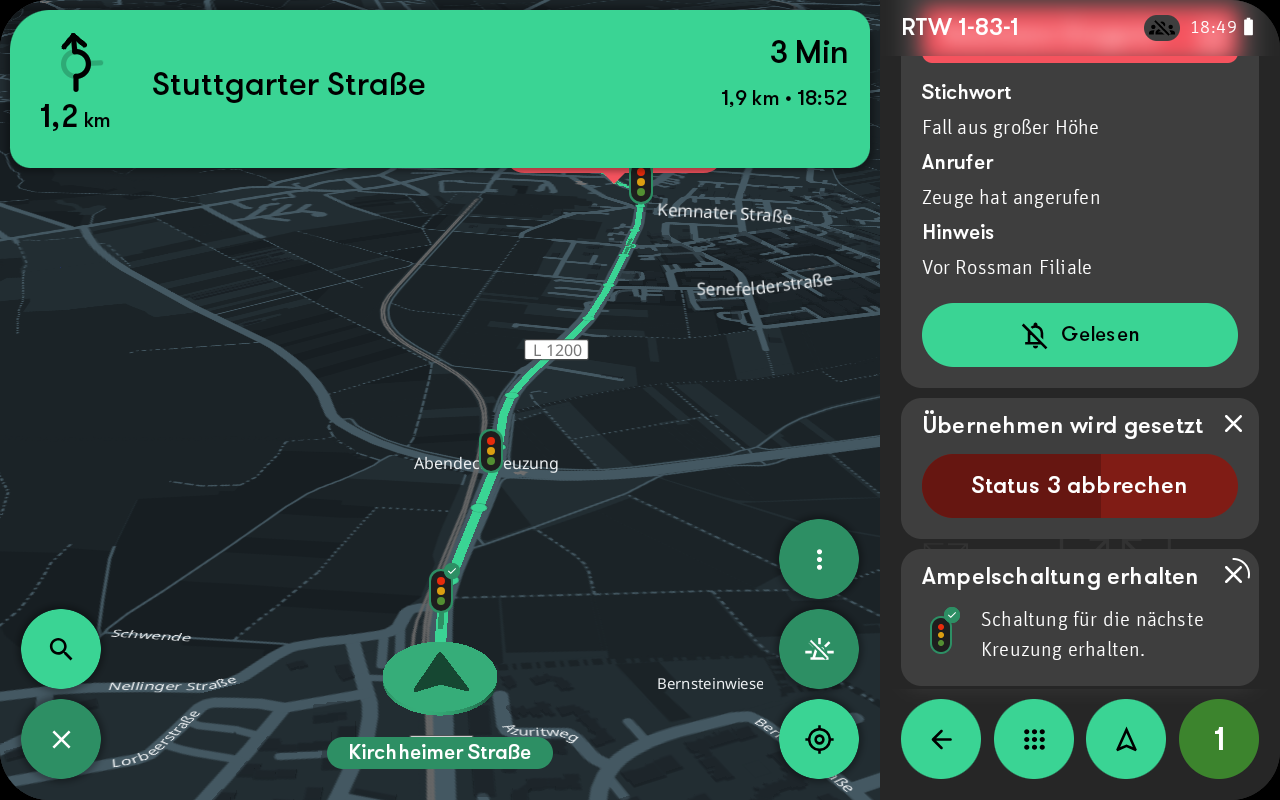

In the vehicle, the display shows the traffic lights on the route and reports when the priority request has reached the next junction.
04
Bollards, barriers, gates
The same request also opens bollards in the pedestrian zone, barriers at emergency access points and gates at fire and ambulance stations. Connected via KNX, Modbus or MQTT, with confirmation that they are open.
05
V2X is already in the gateway
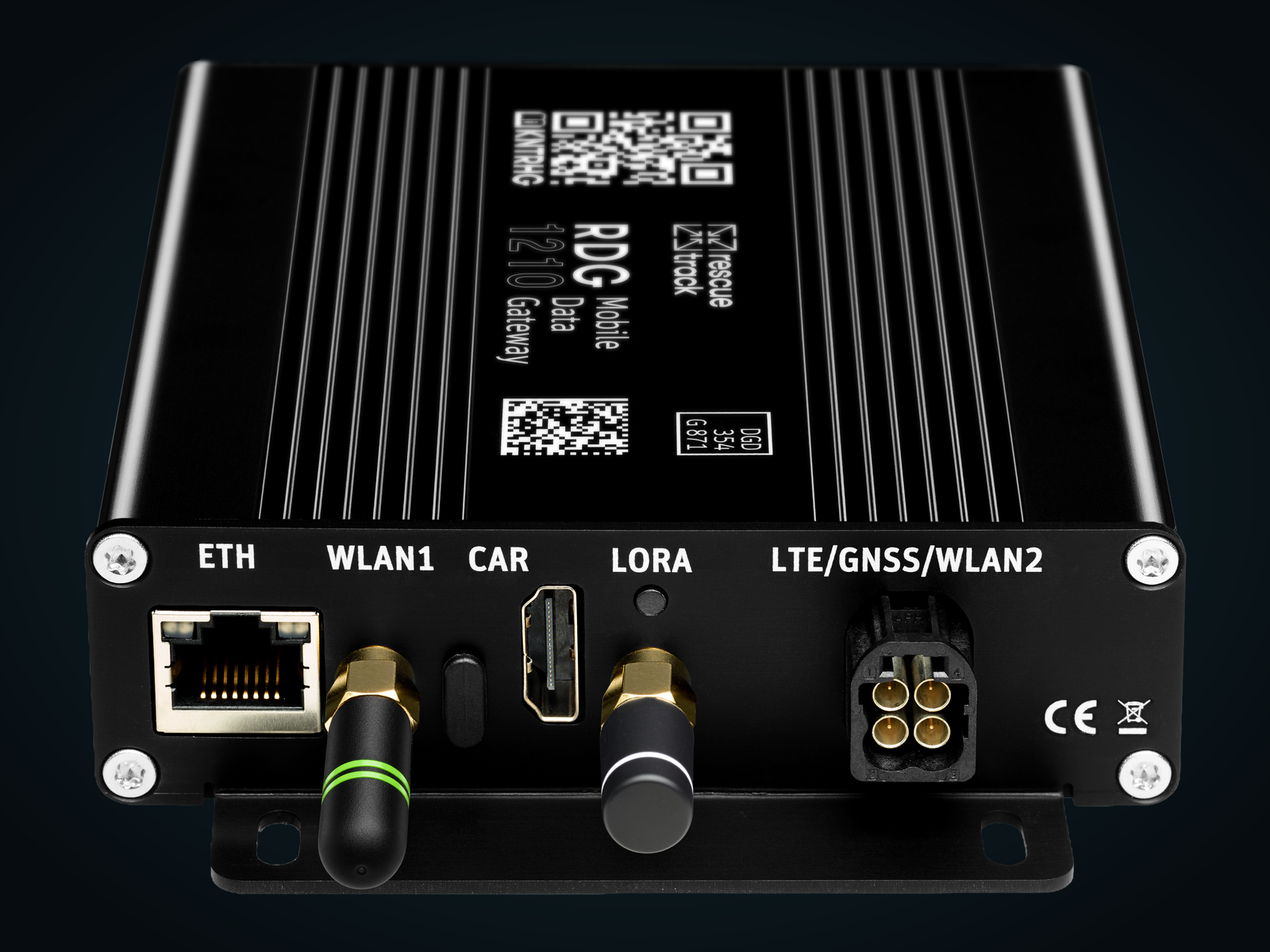
Traffic signal priority via the traffic computer is in regular operation. For the direct path, the V2X radio module is built into the RDG1210, with its own antenna for emergency services radio and V2X.
The direct path is in pilot.
See Signal Priority in action.
We show it to you in your own area. With your stations, your roads, your response times.