First ResponderAlert the right people
Citizen responders who reach the scene before EMS. Only those who can really get there faster are alerted. With app, defibrillator and aftercare.
Our view
Anyone who cannot be there before EMS is not alerted.
At a glance
- head start over EMS, median of 518 alerts in Switzerland
- 3:23 min
- of alerts with a First Responder on scene
- 64%
- of incidents with a First Responder there before EMS
- 59%
01
Who is nearby?
Trained responders are almost always nearby: nurses, firefighters, off-duty paramedics. A simple solution alerts everyone within a radius. Then too many come, or the wrong ones.
Alerts arrive in the App, which EMS and the fire service use too. For a first preselection it transmits only an approximate position. The exact position is requested only when there is an alert.
02
Only those who are faster are asked
With our Bluelight Routing we calculate how long EMS will take, and with footpaths how long each responder will take. Only those who can arrive within that time are asked.
The dispatch centre sets for each area how much of a head start counts and how many responders it needs.
03
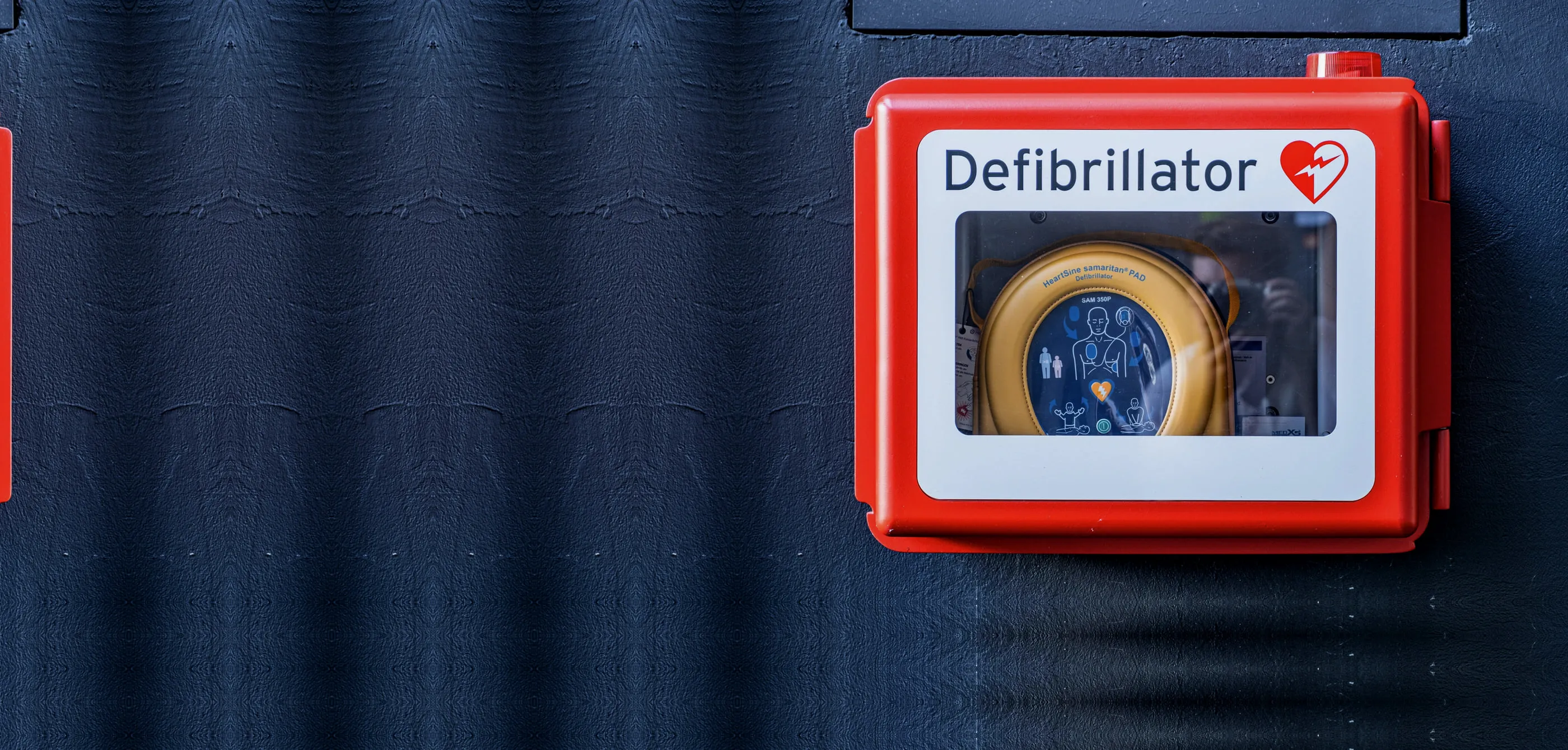
To the patient with a defibrillator
Those who accept state how they are travelling and whether they are bringing a defibrillator. One runs straight to the patient, another fetches the nearest device on the way.
We maintain the defibrillator locations publicly in OpenStreetMap, with opening hours.
04
This is what the alert looks like
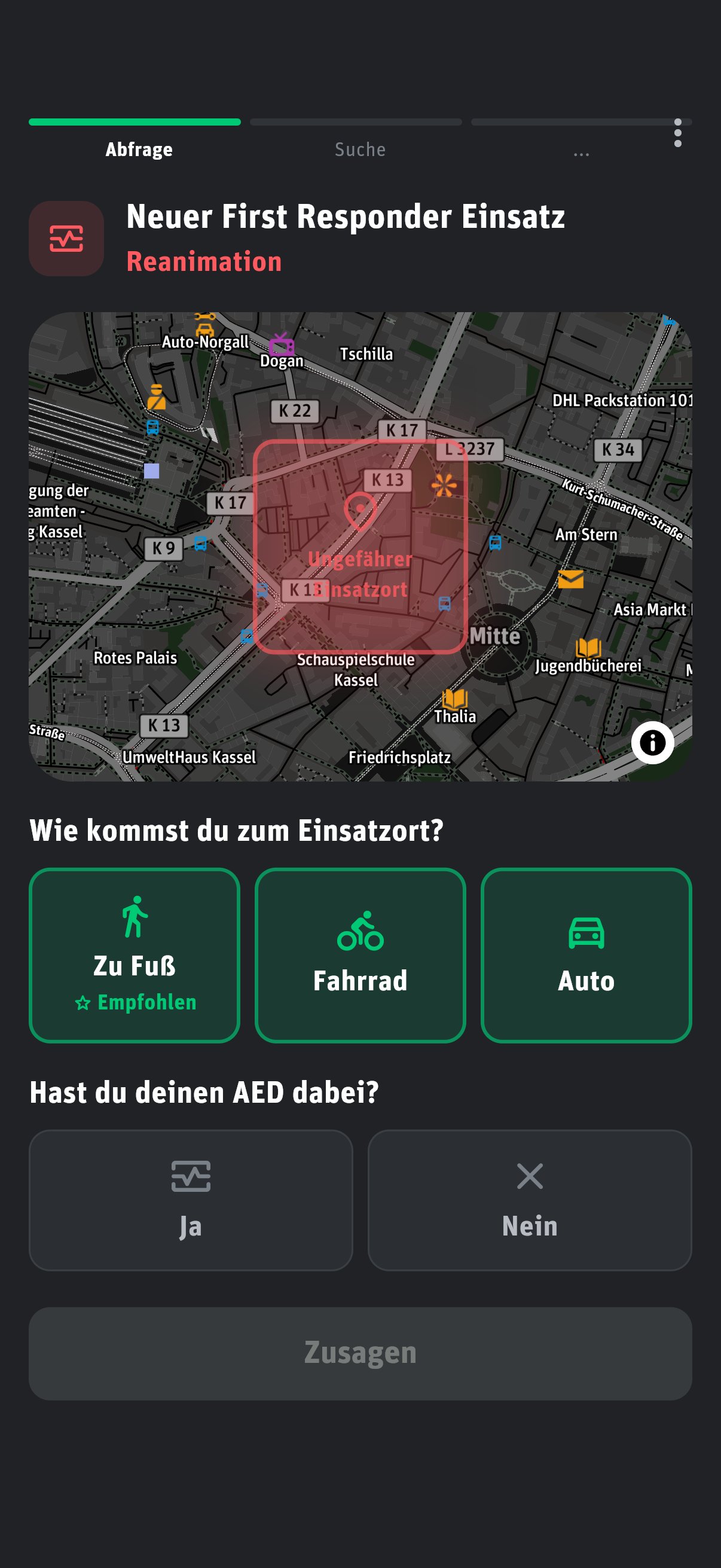
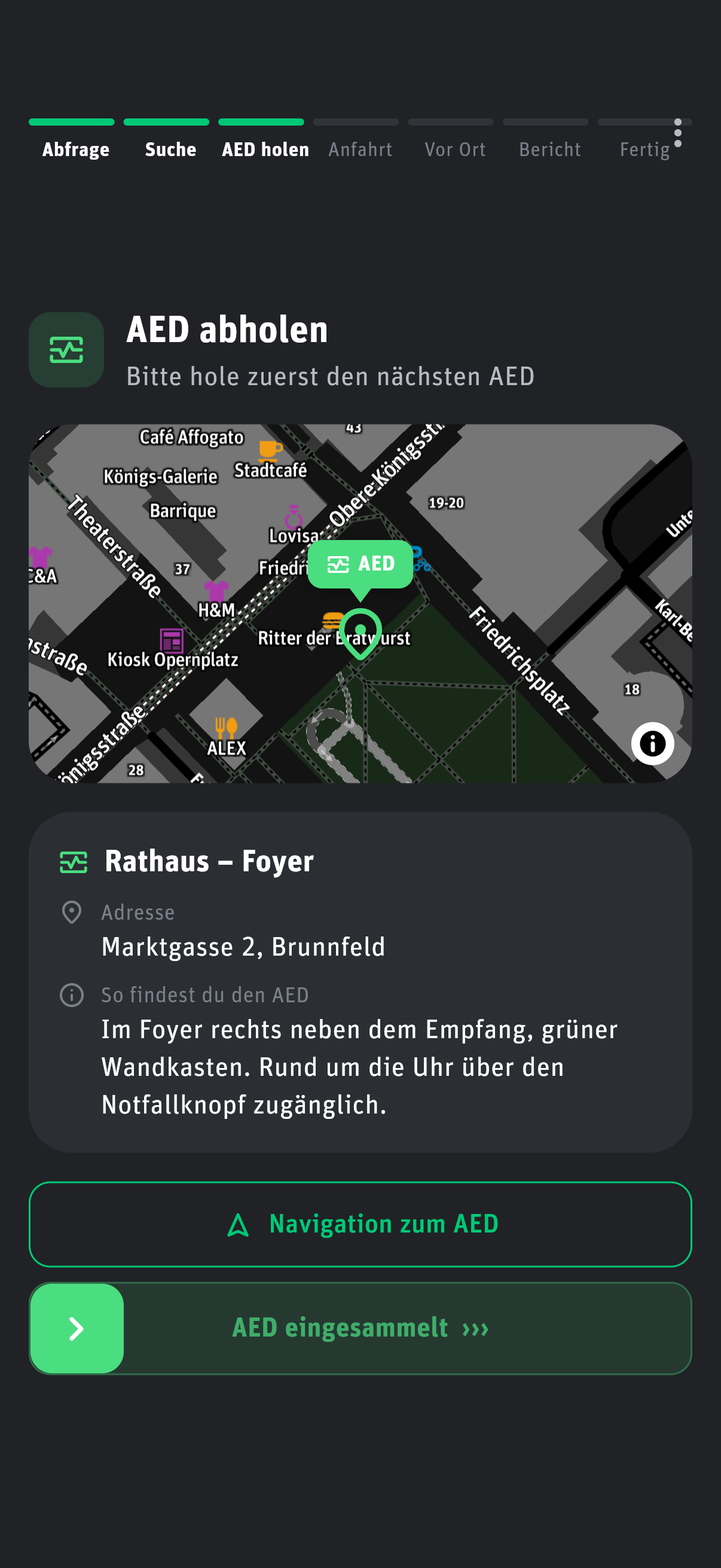
Simulation
The alert asks two questions: how will you get there, and do you have a defibrillator with you? Whoever accepts is guided to the nearest device and then to the patient.
05
What comes afterwards
An incident does not end when EMS arrives. Each region organises aftercare for its responders itself. With all our customers it is part of the service.
In a statistics portal, the dispatch centre sees how often First Responders were on scene, where there are gaps and which areas have no defibrillator within reach.
See First Responder in action.
We show it to you in your own area. With your stations, your roads, your response times.